Aviation safety depends on learning from everyday operations. Reports from individuals and organisations help make hazards, operational difficulties and unsafe conditions visible before they contribute to more serious events.
When reports are considered together, they can reveal recurring issues and emerging risks that a single occurrence might not show. This shared understanding supports better safety decisions across the aviation system.
Recognising safety signals
Safety risks do not always become visible through an accident or serious incident. Smaller events, technical failures, operational difficulties and unsafe conditions can provide early warning signs.
Reporting brings those signals into view. Information from different organisations, locations and operations can help establish whether an issue is isolated, recurring or potentially systemic.
An illustrative example
Several operators report similar difficulties with a procedure. Considered together, their reports may reveal a recurring issue and help determine whether the procedure, guidance or training needs review.
From reports to safety action
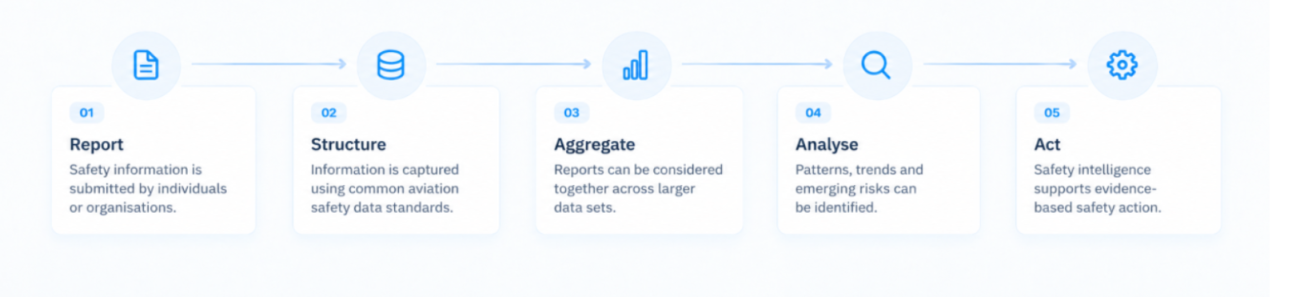
ECCAIRS 2 helps structure occurrence information using common aviation safety data standards. This makes reports easier to compare and supports analysis across larger sets of safety data.
- 1. ReportIndividuals and organisations share safety information.
- 2. StructureCommon data standards make reports comparable.
- 3. AggregateReports are considered together across larger datasets.
- 4. AnalyseAnalysis identifies patterns, trends and emerging risks.
- 5. ActEvidence informs preventive and corrective measures.
Not every individual report leads to a specific action. Its value also comes from the wider picture built from many reports over time.
What good reporting enables
Identify emerging risks
Reports can provide early indications of hazards before they contribute to more serious events.
Understand trends
Consistent reporting over time helps identify how risks evolve across operations, organisations and aviation domains.
Support targeted safety action
Safety data helps authorities and organisations focus attention and resources where they can have the greatest safety benefit.
How reporting supports safety management
Within organisations
Operators, aerodromes, air navigation service providers, maintenance organisations and other aviation organisations use occurrence information to identify hazards, assess risks and determine preventive or corrective measures.
At national level
Authorities combine occurrence information with other safety data to identify priorities and support action through the State Safety Programme (SSP) and national safety planning.
At European level
Analysis across States and aviation domains supports the assessment of safety issues and European safety planning, including the European Plan for Aviation Safety (EPAS).
At international level
Common reporting principles and aligned data standards help the aviation community understand safety issues that extend beyond national and regional boundaries.
International and European framework
Safety reporting forms part of a wider safety management framework. ICAO Annex 19 on Safety Management establishes provisions covering the collection, analysis, protection and exchange of safety data and information.
Within the European Union, Regulation (EU) No 376/2014 provides the framework for reporting, analysing and following up occurrences in civil aviation.
Take the next step